
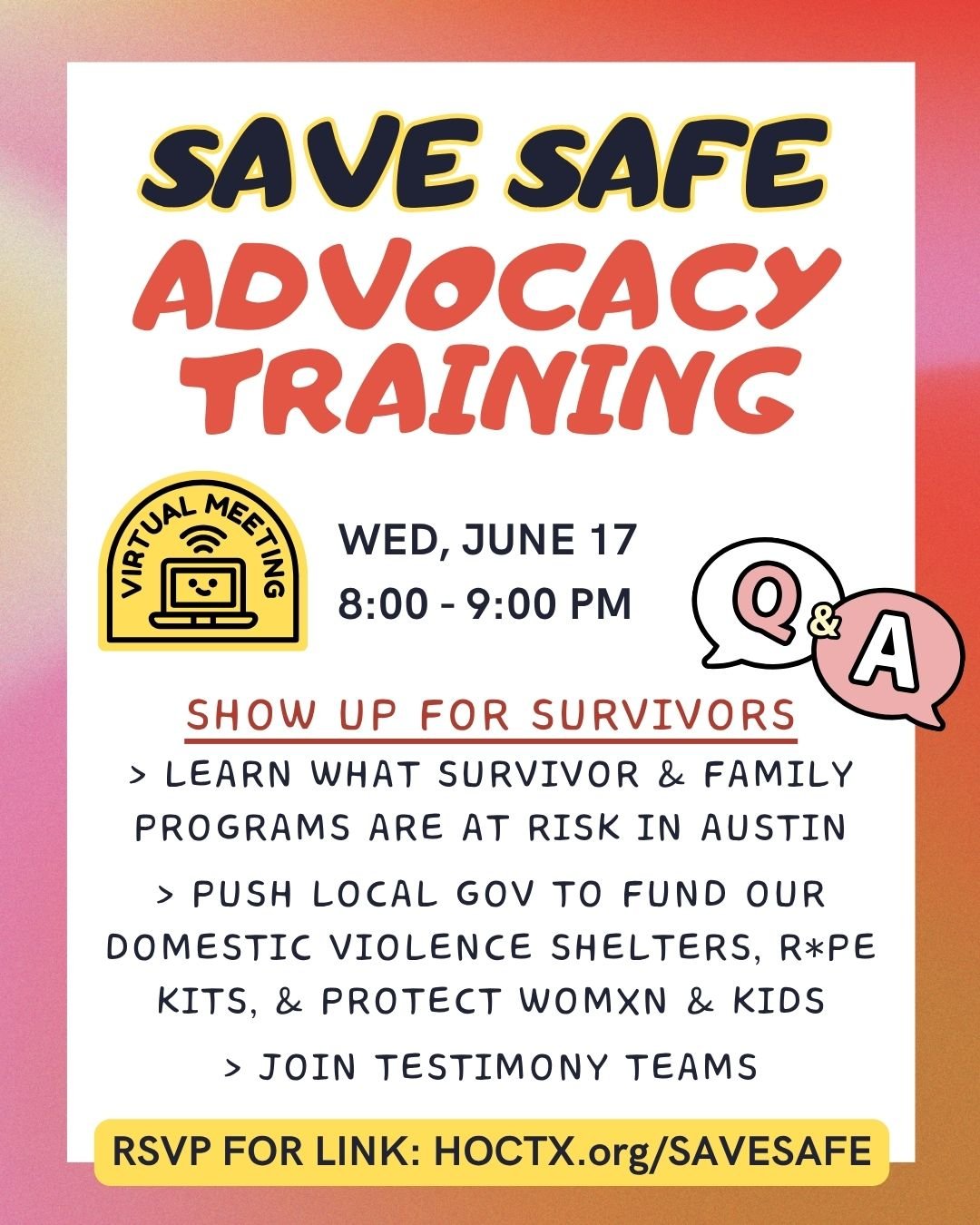
Don’t miss our upcoming SAVE SAFE Advocacy Training on June 17, 8 pm / RSVP here to get prepped to advocate with HOCTX
Organizations who have signed on include:
Grassroots Leadership, Hands Off Central TX, Austin Justice Coalition, Austin Area Urban League, Indivisible Rosedale Huddle, Ground Game, 6W, Equity Action, Nonviolent Austin
Want to sign as an organization and not an individual? Email us at president@handsoffcentraltx.org
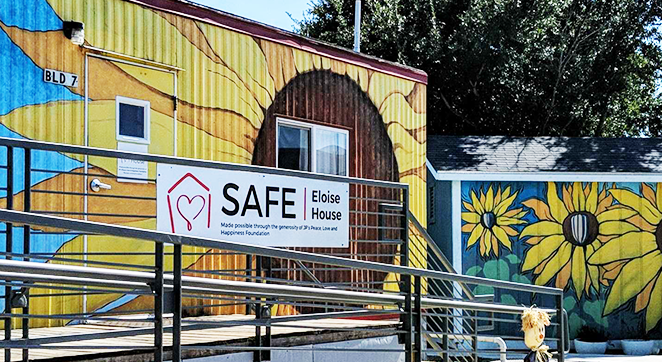
The SAFE shelter is set to close in October unless they get emergency funding…
The SAFE domestic violence shelter houses over 1,000 Austinites per year under threat of imminent violence including murder. With no open shelter beds available in the city, the SAFE shelter is the ONLY option for women and children experiencing domestic violence, trafficking, and the threat of violence.
Half of the shelter occupants are children. SAFE provides an on-site school where children and parents can live full-time on the property without risking kidnappings, violence, and murder that a large number of their residents face outside the shelter. SAFE’s shelter consistently has a long waitlist reflecting the critical need for these services.
Programs run by SAFE are essential for the health and safety of our community. Sign our petition to tell the City of Austin: We expect full funding in the 2026-2027 budget for city-funded SAFE programs, including a 5% yearly funding increase to account for inflation (not counting extra funding needs resulting from increased use of programs in future years).
Crime reporting and survivor services should be the FIRST thing the city invests in.
Sign the petition here - make your voice heard + get updates and action items
Austin lost our primary r*pe kit provider - the city could have saved it.
On June 9, forensic exam services (aka rape kits) at SAFE Alliance’s Eloise House ended (thanks to a nosedive of funding for survivor services: federal funding cuts, the state of the economy drying up donor funding, etc.)
The absence of emergency funding from the City of Austin is an announcement to the city that sexual crimes are not an APD priority.
In 2025, 95% of all rape kits collected in Travis County were collected through SAFE and the non-hospital Eloise House facility, at an average of two crimes per day in 2025.
The Mayor and APD published memos about their stop-gap solution: at out-of-town exam provider and sending survivors to 3 hospitals or Cedar Park. We have serious concerns about their “solution”:
Dumping the responsibility on local hospitals and an out-of-town nonprofit will result in an immediate drop in the reporting of domestic violence and sexual crimes.
City officials have been unable to explain to residents how they will be able to get a forensic exam through a hospital without being charged for hospital resources.
We have not been shown a reasonable plan for ER wait times or for immigrants who experience heightened risk in institutions like hospitals.
We have not been given guidance on how to report malpractice or medical coercion - frequent problems that the trauma-informed Eloise House was created to avoid.
Sign the petition! Make your voice heard + get updates and action items
P.S. Without emergency action from our local gov, SAFE Alliance did close their forensic exam program (r*pe kits) at Eloise House on June 8. HOWEVER, they are STILL OFFERING extensive survivor services, including survivor advocates who go with you to get the forensic exam, now provided by Cedar Park-based exam provider Brave.
Keep directing your community to SAFE Alliance’s SAFEline: 512-267-SAFE (7233) — 24/7, free, confidential